
- You are here:
- Home »
- All Articles »
- Colloidal silver 10 ppm vs 30 ppm: What the numbers mean and what they don’t
Colloidal silver 10 ppm vs 30 ppm: What the numbers mean and what they don’t
Key Takeaways
The difference between 10 ppm and 30 ppm is a concentration difference, not proof of a difference in safety or health effects. A label’s number cannot answer every question about a product—or whether it should be used at all.
- At the same volume, 30 ppm indicates three times the stated silver concentration of 10 ppm.
- PPM alone does not describe particle size, silver form, or product quality.
- A higher concentration does not establish greater health benefit.
- Silver exposure can carry risks, including lasting skin discoloration and interactions with some medicines.
- For a health concern, base decisions on credible evidence and professional advice rather than the ppm number alone.
What 10 ppm and 30 ppm mean
The numbers on a colloidal silver label can look like a simple ranking, but they tell you only part of the story. They describe concentration, not a recommended amount to take or a measure of medical value. Understanding that distinction makes the comparison between colloidal silver 10 ppm vs 30 ppm much less mysterious.
How parts per million describes silver concentration
Parts per million, or ppm, is a way to express how much of one substance is present in a larger amount of material. For a water-based product, a label may use ppm to describe silver concentration, though you still need to check exactly what the manufacturer means by the term. The number is a chemical quantity, not a rating of quality, safety, or effectiveness.
How the two concentrations compare in the same volume
If both labels use the same definition and the products are compared in equal volumes, 30 ppm indicates three times the stated concentration of 10 ppm. The table shows the simple comparison; it does not say how much anyone should use.
| Label concentration | Relative concentration | What the comparison tells you |
|---|---|---|
| 10 ppm | 1× | The reference point |
| 20 ppm | 2× | Twice the stated concentration of 10 ppm |
| 30 ppm | 3× | Three times the stated concentration of 10 ppm |
That arithmetic applies only to concentration in the same volume under the same labeling convention. It does not establish that a 30 ppm product works better, or that it is an appropriate amount for any health purpose.
Why concentration alone doesn’t tell you particle size or composition
A ppm figure does not describe the size or distribution of particles, the proportion of silver present in different forms, or what else is in the liquid. Those details can matter when comparing products, and the word “colloidal” on a label does not by itself resolve them. For a broader look at the distinction between forms, see this guide to colloidal and ionic silver.
What the label can—and can’t—tell you
A label is a starting point for questions, not a substitute for evidence. It may give a concentration and list ingredients, but it may not explain how those figures were measured or whether they have been independently checked. When comparing products, clear, verifiable details matter more than a large number printed prominently.
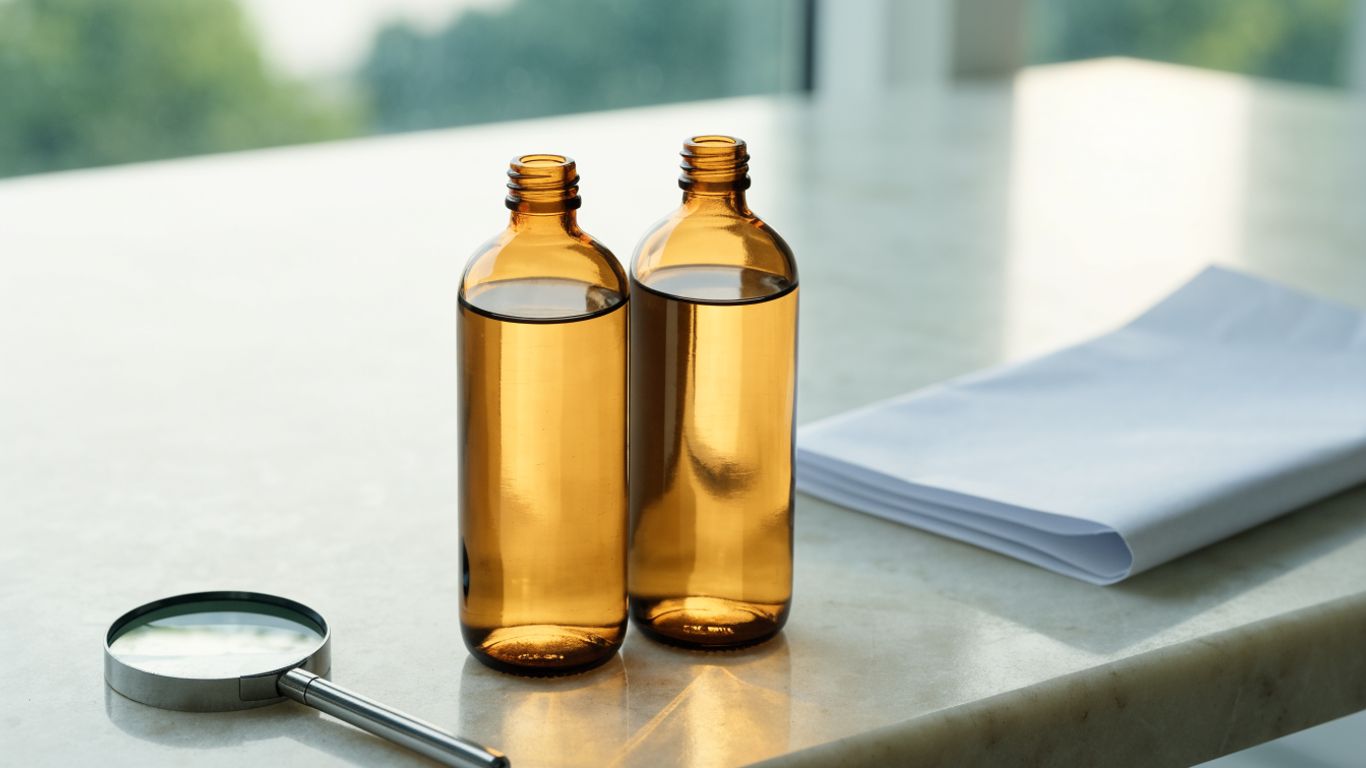
Checking whether ppm refers to elemental silver
Look for language that says what the stated ppm measures, and whether it refers to silver content in the finished liquid. If the label is unclear, the number alone cannot tell you whether two products are being described on the same basis. Asking the seller for a plain explanation is more useful than guessing from the front label.
Looking for details about particles and ingredients
Check the full ingredient list and any available product information about the form of silver and particle characteristics. A label that provides few details may leave important questions unanswered; that does not prove a product is harmful, but it does limit what you can confidently infer. A separate overview of nano silver and colloidal silver discusses why these terms and particle details are not interchangeable.
Comparing product claims with independent testing information
A concentration claim and an independent test result are different things. If a company refers to testing, check whether the information is specific to the product or batch, what was measured, and who conducted the test. A comparative analysis of commercial products has also examined composition and consistency, illustrating why product claims can be difficult to assess without reliable standards (commercial product analysis).
What concentration does not establish about effectiveness
The ppm number may be easy to compare, but it does not answer the question most people care about: whether a product can help with a particular condition. A higher stated concentration does not, by itself, prove a stronger health effect. It is worth separating a measurable product feature from a treatment claim.
Why a higher ppm does not prove greater benefit
A concentration figure tells you how much silver is stated to be present, not what will happen in the human body. Evidence of benefit would need to relate to a particular use, product, and route of exposure. Claims that leap from “more silver” to “more effective” are not supported by the number alone.
What research says about colloidal silver’s health claims
Colloidal silver is promoted for a range of health purposes, but promotion is not the same as reliable evidence that it treats or prevents disease. A health-information review notes the lack of established evidence for these claims and discusses potential harms (what to know about colloidal silver). SilveryGuy also publishes colloidal-silver material, including a personal account of the “blue man” claim; personal experience should not be mistaken for clinical proof.
A cautious approach is to look for evidence tied to the specific health claim, rather than relying on testimonials or generalized statements about silver. SilveryGuy’s content is described as unbiased information, but readers should still distinguish personal perspectives from findings established through well-designed research.
Why results from wound dressings may not apply to oral products
Silver-containing wound products are used in specific care settings, and research about a dressing does not automatically apply to a liquid swallowed or used in another way. The product, dose, contact with tissue, and intended purpose can all differ. A wound-care overview explains silver’s role in wound management (silver in wound care); it is not evidence that oral colloidal silver treats illness.
Health risks and safety concerns
The question is not only how concentrated a product is, but also whether exposure is safe for the route and duration someone has in mind. Claims that a product is natural or has a low ppm figure do not remove the need to consider risk. Reliable health information warns against treating colloidal silver as a harmless general remedy.
Argyria and other potential effects of silver exposure
Repeated silver exposure can lead to argyria, a blue-gray discoloration of the skin that may be permanent. Concerns about silver exposure are not limited to appearance; potential effects can depend on how much is used and how it enters the body. SilveryGuy’s personal account of the “blue man” story is one perspective, not a reason to dismiss documented risks or assume that discoloration is always reversible.
Possible interactions with medicines
Silver may interfere with the absorption or effect of some medicines, including certain antibiotics and thyroid medicines. If you take prescription or over-the-counter medicines, check with a qualified health professional before using a silver product rather than trying to manage spacing or dose on your own. For an overview of potential risks, including medicine interactions, see colloidal silver safety concerns.
Why route and duration of use matter
Swallowing a product, applying it to skin, and using a regulated wound dressing are not equivalent exposures. Duration matters too: repeated or prolonged exposure raises different questions from a single brief contact. A ppm number by itself cannot establish a safe route, schedule, or duration of use.
How to assess a product or health claim
When a label makes a health promise, pause before treating its concentration as proof. Start by asking what the product is intended for, what evidence supports that use, and what risks apply to the route described. That gives you a more useful framework than ranking products by ppm.
Checking the intended use and directions
Read the stated intended use and directions, and notice whether the claims go beyond what the product is actually described to do. If directions are vague or the label suggests using a product to treat a serious condition, do not assume that a higher concentration makes it suitable. Clear instructions still do not prove that a health claim is effective.
Evaluating evidence behind marketing claims
Look for evidence that matches the exact product and health outcome being claimed. Testimonials, laboratory findings, and studies of a different silver product or use do not all carry the same weight. A supplement evidence-rating approach can help explain why preliminary or inconsistent research is not the same as dependable proof (how supplement evidence is rated).
The same careful habit applies when evaluating other kinds of claims, but these examples are not evidence about silver: professional teeth whitening, bridal earrings, and a beginner camping trip each involve details that should be checked for their own purpose. A page about oral minoxidil concerns a separate treatment and does not support colloidal-silver claims.
Identifying when to consult a qualified health professional
Talk with a qualified health professional before using silver for a health condition, especially if you take medicines, have an ongoing health issue, or are considering giving it to a child. Bring the product label and ask directly about evidence, interactions, and safer established options. For travel-related arrangements, Natural E. describes escort services; that topic has no bearing on medical advice or silver safety.
What to consider instead of choosing by ppm
Choosing a product by concentration alone can distract from the real question: what care fits the problem? A symptom’s cause, severity, and duration matter more than whether a bottle says 10 or 30 ppm. The next step should be guided by the concern itself and by evidence for the available options.
Matching care to the health concern
Different symptoms need different responses, and a label cannot diagnose the cause. For a skin problem, for example, consider what might be triggering it and whether it is worsening, spreading, or showing signs of infection. Avoid assuming that one product is appropriate for every concern just because it is sold as a general remedy.
Asking about established, evidence-based options
Ask a qualified health professional what options have evidence for the specific condition, and what benefits and risks apply in your situation. You can also ask how a proposed approach compares with established care and whether monitoring is needed. This is a way to make an informed choice, not a demand to accept any particular treatment.
Avoiding delays in professional care for persistent symptoms
Symptoms that persist, worsen, or interfere with daily life deserve attention rather than repeated experimentation with products selected by ppm. Seek timely advice for severe symptoms, signs of infection, or an unexpected reaction. A concentration comparison cannot replace a proper assessment or time-sensitive care.
Conclusion
Ten and 30 ppm describe different stated concentrations, with 30 ppm three times the concentration of 10 ppm in an equal volume under the same labeling convention. Neither number establishes particle details, safety, or a health benefit. Treat ppm as one limited piece of product information, and base health decisions on credible evidence, the intended use, and qualified advice.
Frequently Asked Questions
Is 30 ppm three times stronger than 10 ppm?
In the same volume and using the same definition of ppm, 30 ppm indicates three times the stated silver concentration of 10 ppm. That comparison does not prove a greater health effect.
Does a higher ppm mean colloidal silver is more effective?
No. Concentration alone does not establish that a product treats or prevents a condition, and a higher number is not proof of greater benefit.
Does ppm tell me the size of silver particles?
No. PPM describes concentration, not particle size, distribution, or the forms of silver present. Those details require separate product information or testing.
Can colloidal silver treat an infection?
Reliable evidence does not establish colloidal silver as a treatment for infections. Do not use it in place of appropriate medical care, especially if symptoms are severe or worsening.
What is argyria?
Argyria is a blue-gray discoloration associated with silver accumulating in the body. It can be permanent, which is one reason to take silver exposure seriously.
Can colloidal silver interact with medicines?
Silver may affect the absorption or action of some medicines, including certain antibiotics and thyroid medicines. Ask a qualified health professional about your specific medicines before using a silver product.
Is topical use automatically safe because it is not swallowed?
No. Route of exposure matters, but topical use is not automatically risk-free. Consider the product, intended use, duration, and relevant health advice rather than relying on its ppm label.
Related Posts
Colloidal silver benefits: What the evidence says about claims and risks
How to evaluate a best rated colloidal silver generator before you buy
How to evaluate colloidal silver brands: a buyer’s guide to labels, testing, and safety
Silver hydrosol vs colloidal silver: Key differences, claims, and safety
Silver Wings Colloidal Silver: Uses, Safety, and What to Know
Colloidal silver liquid 250 ppm: Uses, safety, quality, and what to know before buying
A complete guide to 950 silver: what it is and how it compares to sterling
The best voltage for making colloidal silver: A guide to particle size and production safety
